
Coffee pulp flour as ingredient in traditional food of coffee growers – a project for and by women in Antioquia, Colombia

My colleague Fabiola and I had the pleasure of speaking with Briana, an associate lecturer at the University of Antioquia, about the coffee pulp flour projects in Antioquia, Colombia. Briana led a project focused on empowering female coffee growers in the region by exploring the production of coffee pulp flour, with the aim of promoting its local consumption.
Hello Briana, thank you for taking the time to speak with us today! Can you tell us a little about yourself?
Sure! I am a dietitian and nutritionist with postgraduate studies in food and plant-based nutrition in Colombia. Currently, I’m a lecturer at the University of Antioquia in the School of Nutrition and Dietetics.
What inspired the development of coffee pulp flour?
Colombia, renowned for its coffee, faces a significant environmental challenge linked to coffee production. The wet process generates substantial pollution, primarily due to the untreated residues such as coffee pulp. This pulp, which makes up about 45% of the coffee cherry, is responsible for nearly 70% of the potential contamination from coffee processing. Along with mucilage and parchment, these byproducts often find their way into groundwater and other water sources, causing serious environmental harm.
In my opinion, pulp has not been sufficiently explored for its potential use in food. Initially, we considered creating an extract, as coffee pulp flour already exists and is available in some markets. However, we ultimately concluded that a pulverized product like flour is easier to incorporate into food products and meals compared to a dry or liquid extract.
What was the objective of the project?
With this project we wanted to demonstrate that it is not only possible to upcycle a waste product and bring it into the food chain, but that the coffee growers themselves can make use of it as food. In other words: creating a low-cost, artisanal product derived from coffee pulp, and integrating it directly into the traditional mountain recipes of Antioquia.
We wanted to demonstrate that it is not only possible to upcycle a waste product and integrate it into the food industry but also that coffee growers themselves can utilize it as food or at least an ingredient. In other words, the aim was to create a low-cost, artisanal product from coffee pulp and incorporate it directly into traditional mountain recipes of Antioquia.
What was your role in the project?
My primary role was conducting research and managing the project logistics. I worked closely with the Universidad de Antioquia and the Cooperativa de Caficultores de Antioquia. The participation of the cooperative was crucial because it maintains direct contact with its members, the coffee growers.
Who exactly did you work with?
The trials were carried out in different municipalities across Antioquia, located in northwest Colombia. The vast majority of the coffee farmers involved were female, as the project emphasized gender inclusion. The work took place on agro-ecological farms, which avoid the use of pesticides and follow sustainable practices. The coffee growers’ cooperative served as the central hub where participants were introduced to the project, conducted research, dried the pulp, and exchanged insights.
These farms also use drying tents, known as “Marquesinas.” Applying our drying protocol for the coffee pulp, designed specifically to reduce the microbiological load, proved challenging. This was especially true because we worked with multiple farms simultaneously during the peak harvest season, which is the busiest time of year for farmers.

Drying tent (Marquesinas) for parchment coffee and coffee pulp on a roof.
Do the women involved work collaboratively on this, or does each produce her own flour?
The cooperative was the primary gathering point where the women were introduced to the project, participated in the research, and learned about the drying methods. However, each farmer returned to her own farm to produce the flour independently. The research and education aspects were collaborative, fostering knowledge sharing that continues to benefit other farms in the community.
Why was the focus on women?
We focused on women because they are disproportionately affected by food and nutritional insecurity. Women also often bear the primary responsibility for their families, whereas men, in this regard, tend to be, let’s say, more “reserved.”
Additionally, there are coffee farms managed solely by women, and we wanted to support and promote these farms in particular.
I assume coffee pulp flour was new to them. How was their reaction in the beginning?
I would say they were skeptical but interested.
Let’s take a look at the process of making coffee pulp flour. What are the steps from freshly removed pulp to the final product?
Initially, we surveyed 188 coffee farmers to determine the best approach for the project. The results revealed that one in three women knew the pulp could be used as soil amendment or as additive to animal feed. Surprisingly, 90% of the participants were willing to try incorporating flour as an ingredient in their food. This was incredibly encouraging and demonstrated the feasibility and potential success of the project.
Coffee pulp, if not treated properly, has a high microbiological load, which is a major limiting factor for human consumption. To address this, we developed a drying protocol in the second phase of the project to reduce microbiological load to acceptable levels. We conducted a series of trials, using different drying methods, such as with and without drying tents, varying drying times, turnover schedules, and methods to keep animals away.
The best results were achieved with a 36-hour drying period in a closed drying tent. The pulp was turned periodically depending on the weather to ensure even drying. On hot days, it was turned every 4 hours, while on cooler days, it was turned every 6 hours. The tents were also the most effective method for keeping animals away. This drying stage was the most challenging part of the project.
Once the pulp was dried, we tested it in different textures: liquid, pulverized, and oil maceration. Pulverized pulp, essentially a flour, turned out to be the most versatile and effective form for food applications. The dried pulp was then analyzed for pesticide residues, mycotoxins, physio-chemical components (nutritional content), phenolic compounds, and antioxidant potential.
Next, we tested various household grinding tools, including blenders, mortars and pestles. The blender proved to be the best option, producing a fine flour that met our requirements.
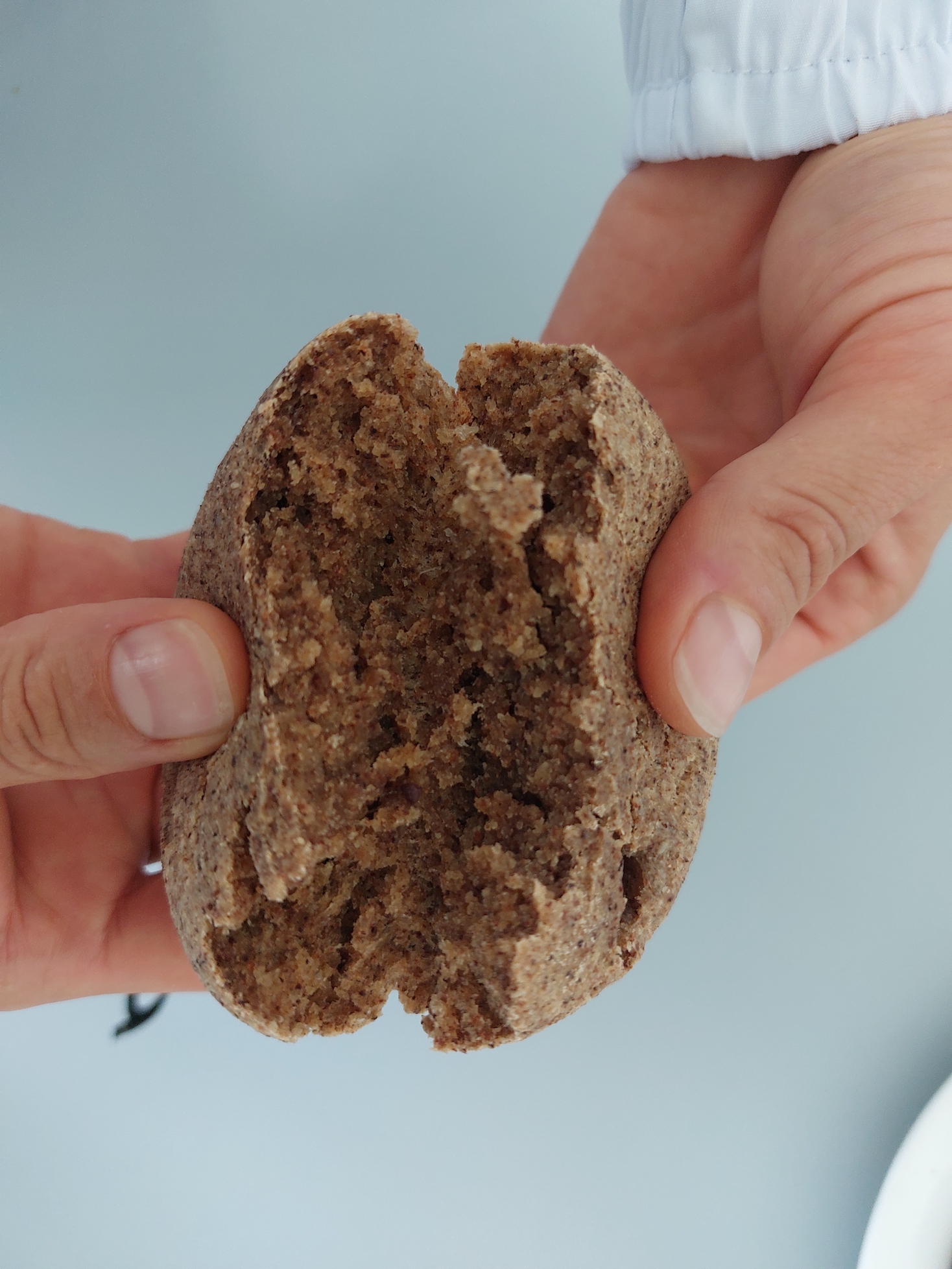
This finely ground flour was incorporated into 21 traditional cooking and baking recipes from the region. We carefully adjusted the recipes to ensure the flour was well-integrated into items like breads, arepas, toasts, soups, pasta and meats without negatively impacting their sensory qualities. We also conducted sensory acceptance tests with coffee growers to identify the most favored recipes. Nutritional and antioxidant analyses were also performed on the finished dishes.
Who conducted the cooking and baking tests and created the recipes?
TThe recipes were developed in the Food Laboratory of the University of Antioquia. One major challenge was maintaining the original taste and flavor of the traditional recipes. This required extra care, as people are often sensitive to changes in their food, especially when the ingredient comes from a waste product like coffee pulp. Who wants to eat “waste”? It was a delicate task, but we managed to succeed.
We also experimented with beverages, but we couldn’t get a pleasant taste profile. For now, the flour appears unsuitable for making beverages, at least with the methods we tried.
What are the advantages of adding coffee flour to other foods?
Coffee flour contains 11% protein, which is very good, and an impressive 44% dietary fiber, including 36% insoluble fiber and 8% soluble fiber. It also contributes potassium and phosphorus, along with smaller amounts of iron, zinc, magnesium.
While we cannot directly compare nutrients from plants to those of animal origin, the micronutrients in the pulp are highly valuable. Their bioavailability and amounts may differ from animal-based sources — similar to the differences between plant-based and dairy proteins — but they still provide significant nutritional benefits to the farmers. Utilizing coffee pulp as a nutrient-rich ingredient highlights the potential of a resource that has long been overlooked.
What was the ideal percentage of coffee flour used in the recipes?
We didn’t establish exact percentages, as taste and preferences vary among individuals. However, we provided general recommendations. For example, in bakery products, we added between 8 to 12 grams of coffee flour per serving.
The coffee pulp doesn´t come without caffeine. How much of it is present in the flour?
The flour is rich in nutrients, but also high in caffeine —100 grams of flour contains 1.76 grams of caffeine. Based on the recommended daily caffeine intake of 400mg in the EU and North America, a person should consume no more than 23 grams of the flour per day, which is equivalent to about 2–2.5 servings.
But how can the caffeine content be controlled if the flour is added to various foods or meals throughout the day in different amounts, depending on personal preferences?
In the Antioquia region, the caffeine content is not a concern. People here have been drinking coffee from a young age, which has made them less sensitive to caffeine. Therefore, the 400mg per day recommendation does not apply to them.
Do the women actually still cook and bake with coffee flour?
Yes, we continue our training sessions to share knowledge with other communities. We have created a recipe book that we distribute. Some families are even in the process of getting certified to sell the coffee pulp flour as a safe product, which is the first step toward commercialization.
Do you think they will continue using the flour at home and/or for commercialization in the future?
Yes, I am confident they will. The flour has been well received, not only by the women but also by their families. In fact, some of the women have already begun commercializing it, as I mentioned earlier.
Do you think other women who did not participate in the project will learn from those who did and start producing their own coffee flour?
The cooperative ran the project in 5 out of 52 municipalities. Women who participated can now train others from the remaining communities. The goal remains the same: to promote the production of flour for personal consumption. However, if those trained choose to sell it, that’s perfectly fine as well. Those who prefer not to produce it themselves will also have the option to purchase the flour from the cooperative.
In your opinion, is there a market for coffee pulp flour?
Indeed, I think there is potential. As I said before, producing the flour for sale has not been our primary goal, but these women are resourceful. We will see how it develops!
Briana, thank you so much for sharing this valuable information!