
Turning spent coffee grounds into a cocoa substitute – The kawa project, USA
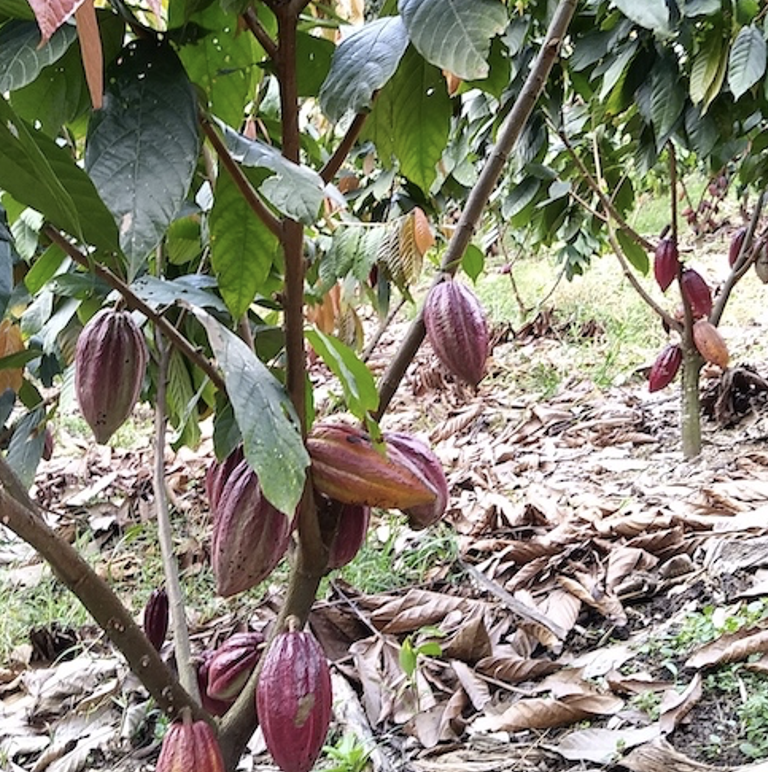
“The beloved world of chocolate is facing a seismic shift as climate change and environmental pressures make traditional cocoa production increasingly unsustainable. Cocoa prices are soaring, and the future of this key ingredient looks uncertain. Major players in the chocolate industry are pressed to find innovative cacao alternatives, and consumers may soon experience chocolate made from entirely new ingredients.”
Forward Fooding
The KAWA PROJECT, USA is one of the many startups that are trying to create cocoa substitutes, be it with or without fermentation. But the KAWA PROJECT is so far the only one that uses spent coffee grounds as a raw material.
Here’s a conversation I had with founder Aaron Feigelman:
Hello Aaron, great to talk to you today! When I stumbled over the Kawa Project at the end of 2023, you and your business partner, Richard Shore, a former lawyer and an experienced businessman, wanted to extract oil from spent coffee grounds. Since then, you’ve changed gears. What was the reason for this change?
The main reason we shifted our approach was due to two factors. First, the applications we found for the oils represented hundreds of millions of dollars in opportunity, but with such a low oil value, we could only make the economics work on a very large scale. And back then we couldn’t find the right investment and manufacturing partners to scale up. A few years ago, some companies were interested in buying large quantities of oil, but we couldn’t figure out how to execute that.
Additionally, we were generating a lot of solid waste as residue, and at the time, we didn’t have a good use for it. From a sustainability perspective, it felt like a waste of resources to go through all the transportation and extraction only to discard so much of the resulting material as powdered solids.
In the United States, it’s difficult to build a business with investors unless you can convincingly pitch it as a multi-billion-dollar opportunity. Everyone wants to invest in things with massive potential. Monetizing the oil alone wouldn’t be enough to reach that scale, but finding a valuable use for the residues could be a profitable solution given how much we were producing.
We eventually ran some pilot projects with large confectionery companies and discovered strong applications in the chocolate market. That was our “aha” moment. Targeting the cocoa market was especially exciting because of its size. Our timing was perfect since cocoa prices have been rising, making it the ideal decision for our team to shift focus from the oil to the powder.
So, what did you do with the residue?
We began exploring the idea of fermenting the powder further using microorganisms, as this process enables the creation of additional cocoa-like flavors. After delving deeper into it, we successfully obtained several valuable patents for the process—one is pending, and one has already been accepted. With the broad range of patents we’ve secured on this fermentation process, we now see numerous opportunities and believe we can firmly establish a presence in the cocoa market related to spent coffee grounds.
About a year ago we raised funds from AgFunder and participated in the Space-F program in Thailand. We decided to invest that capital into further developing the powder.
Which cocoa market segment are you targeting specifically?
We are specifically looking at bakeries, confectionary applications and some beverages.
Like with coffee, there have been a number of crises in the cocoa commodity market, but after a short period of time the market recovered. This time however, it might be a bit different due to the complexity of the crisis, with factors like plant diseases, aging trees, under-investments in the cocoa sector especially on farm level, the lingering impact of inflation etc.
That’s true. In fact, we don’t know what the future holds. Farmers in Africa might start removing their cocoa trees and planting more profitable cash crops, as they often remain at the bottom of the profit chain.
In the long term, it’s possible that farmers in other countries, such as Brazil, may begin growing cocoa due to the potential for higher profits created by the shortage from African farmers. I don’t think we’ll ever see cocoa prices drop as low as they once were.
We also don’t yet fully understand the long-term impact of climate change on cocoa production, which will likely affect regions like West Africa, Brazil, and others in similar ways.
Thanks to the fact that more and more people are realizing that climate change in fact is real, we are now in a general and global phase of innovation, including finding substitutes for cocoa…
Totally! As someone working to create an alternative or substitute, nothing is more convincing to a customer than seeing prices rise significantly. That’s the moment when you really have to get creative and come up with something new.
There are a number of spent coffee grounds upcycling companies like Kaffe Bueno and Connecting Grounds in Denmark, Eco Bean in Poland, Caffe Inc in The Netherlands etc. Are any of them doing what you are doing?
I’m familiar with these companies. Most of them focus on producing chemicals for the cosmetics industry, dyes, and similar industries. To my knowledge, we are the only ones working on a cocoa substitute, and we’re certainly the only ones in the United States doing this.
Let’s have a closer look at what you exactly are doing; for example, where do you source your spent coffee grounds and how do you process them?
We collaborate with our large coffee brewing partners, which makes the collection process much easier.
The fascinating part is our fermentation step. Over time, we’ve learned that cocoa and coffee share similar flavor compounds with overlapping notes. Our goal is to extract the notes that aren’t similar and preserve the ones that are. We ferment further only to add flavor notes that are not present in the coffee.
Let me recap: you know how you can produce and adapt your cocoa substitute, you have filed some patents, but you are not yet in production? Do I have this right?
We have already manufactured a couple of thousand pounds with somebody who might become a manufacturing partner, and we are doing pilot runs with potential customers. We do have the supply chain in the United States to actually start producing.
What are your next steps?
Right now, we’re continuing to pilot with these various cocoa buying companies – both big and small.
And of course, we´re continuing to raise funds.
Aaron, I wish the KAWA PROJECT the best of luck on its journey!