
NEW PRODUCT / SOLUTION
Wood from pruning
APPLICATION SECTOR
Agriculture
VALORIZED OUTPUT
Prunings
TRL
Deploy
CONTEXT
Producing countries
SDG


VALUE CHAIN AREA

Coffee wood comes from the branches and trunks of coffee trees, which are pruned or removed as part of regular cultivation practices. To sustain high productivity over time, coffee plantations undergo periodic renewal, a necessary step in managing the aging of the plants. One widely adopted and cost-effective method for this is the zoqueo system—also known in scientific terms as the Beaumont-Fukunaga system. This technique involves cutting the tree at about 30 cm above ground level, a process that generates two main by-products: Coffee Cut Stems (CCS) and slanted branches.
Reports from Colombia estimate a timber yield of about 16 tonnes per hectare in high-density plantations with roughly 5,000 trees per hectare. Coffee wood is also harvested from trees that are eradicated for replanting, usually after reaching maturity or when their yield declines, typically around the 7th year. Coffee trunks can be repurposed into furniture and home decor items. Moreover, due to their durability and strength, coffee wood holds significant potential for the construction industry, suitable for flooring, decking, and structural components.
An important environmental advantage of utilizing coffee wood is its capacity to sequester and store carbon, thereby supporting broader sustainability goals. When processed into engineered wood products such as Glued Laminated Timber (GLT), coffee wood not only contributes to carbon storage but also enhances the structural performance and aesthetic value of conventional timber, offering a sustainable and visually appealing alternative.
Source:
Rodríguez-Valencia, N. (2023). Aplicación de la bioeconomía circular en el proceso de beneficio de café con cero residuos. In Cenicafé eBooks. https://doi.org/10.38141/cenbook-0032
DESCRIPTION


IMPACTS



Limits of the implementation of the practices are the small sizes of the shrubs which are unsuitable for lumber production. Another issue is that coffee wood is only available in the regions were stubbing of the trees is done and it occur leaving a logistical issue for the retrieval of the wood, and the and the different stages of the plant life where the procedure is done, approximately every 4/6 years.
An average of 32 tons of coffee stems are retrieved from a high-density plantation 5000 plants per ha resulting in an average of 0,54 kg of coffee stalks per 1 kg of processed fruit. Generally, 85.000 ha are pruned annually in Columbia. In Brazil the cultivar covers 2270 million ha of land, and an estimated amount of 31654 million tons of coffee stalks and branches are produced. Leaving a huge amount of biomass to be redirected to recovering sites.
CHALLENGES AND LIMITS

EXAMPLES OF APPLICATION
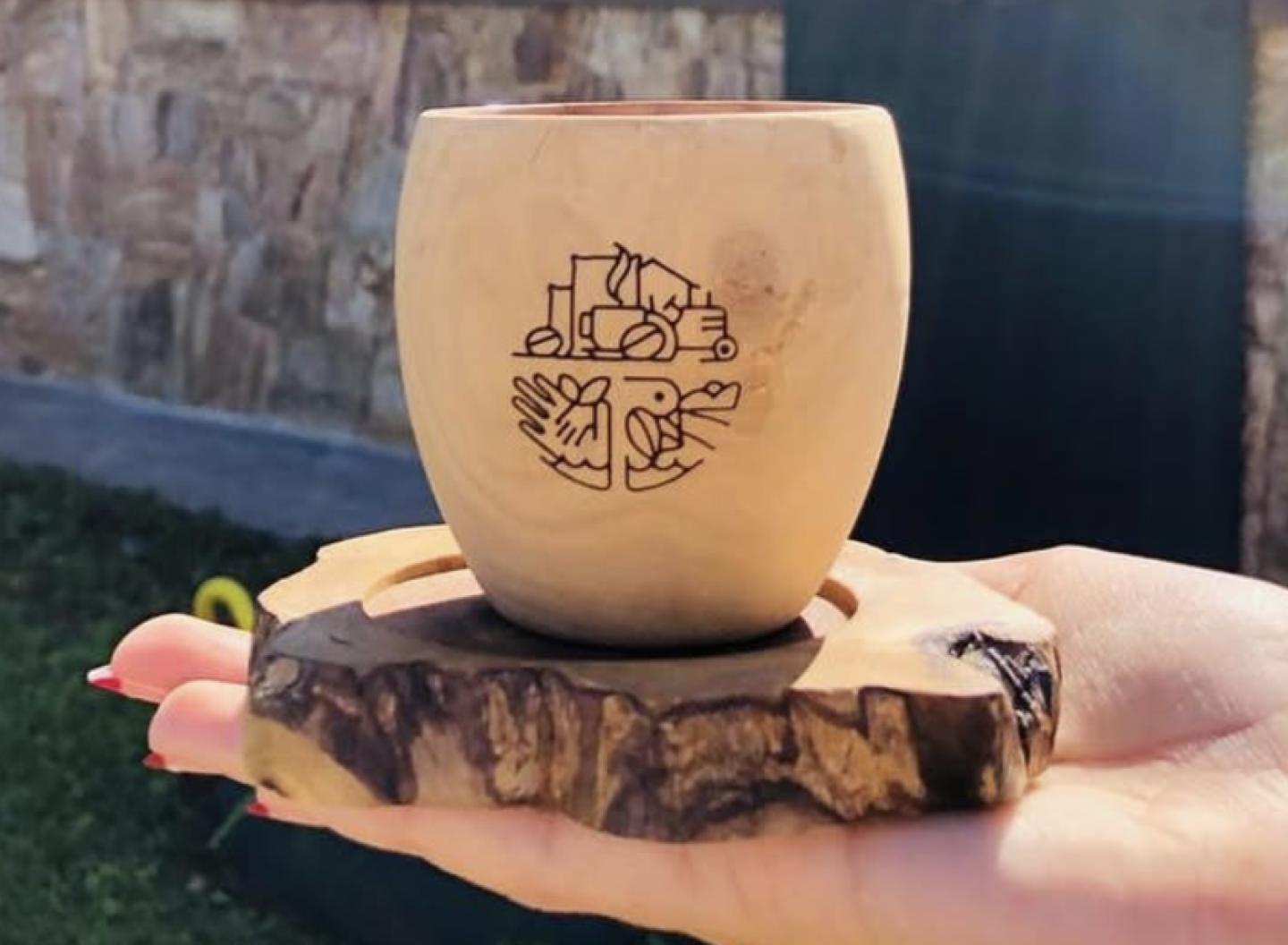
Wood n’ Coffee transforms wood from pruned coffee plants into high-quality design products, giving new purpose to a natural resource that would otherwise be discarded or burned. Through a controlled sourcing and processing system, the wood is traceable to its farm of origin and undergoes standardized drying, treatment, and machining to ensure structural stability, durability, and consistent product performance.
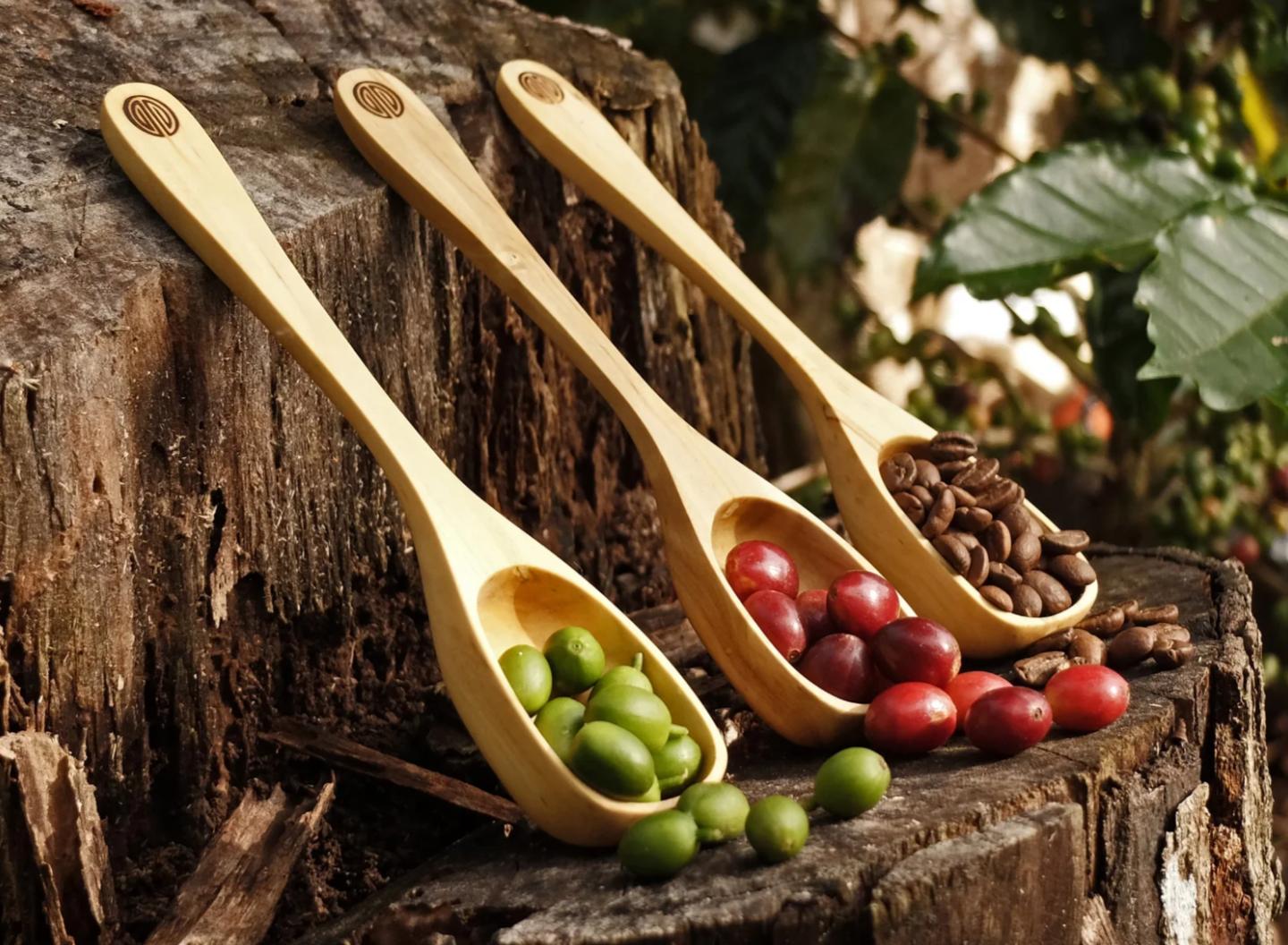
de Palo Products produces handcrafted objects made from real coffee tree wood, turning a normally discarded resource into functional design pieces. By sourcing wood from pruned coffee trees, they support coffee farmers and provide dignified employment to rural artisans in Honduras.
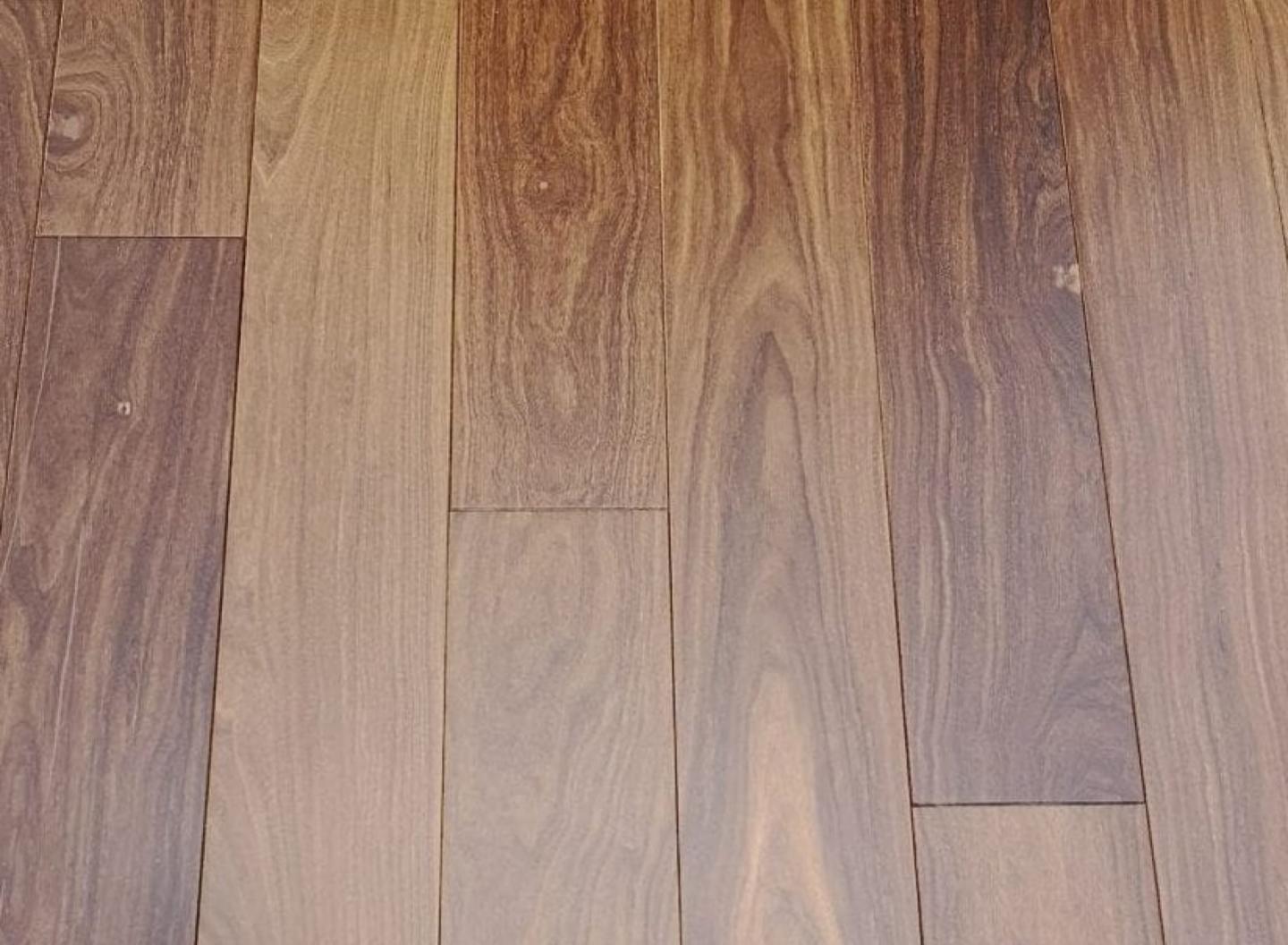
Elemental Hardwoods is a Seattle‑based company dedicated to sourcing and offering sustainably harvested, exotic hardwoods with full forest-chain traceability and a commitment to environmental stewardship. Their Momoqui (Bolivian Coffeewood) solid hardwood flooring, made from FSC-certified Caesalpinia pluviosa, features exceptional hardness and a naturally rich walnut-brown color that deepens with age.
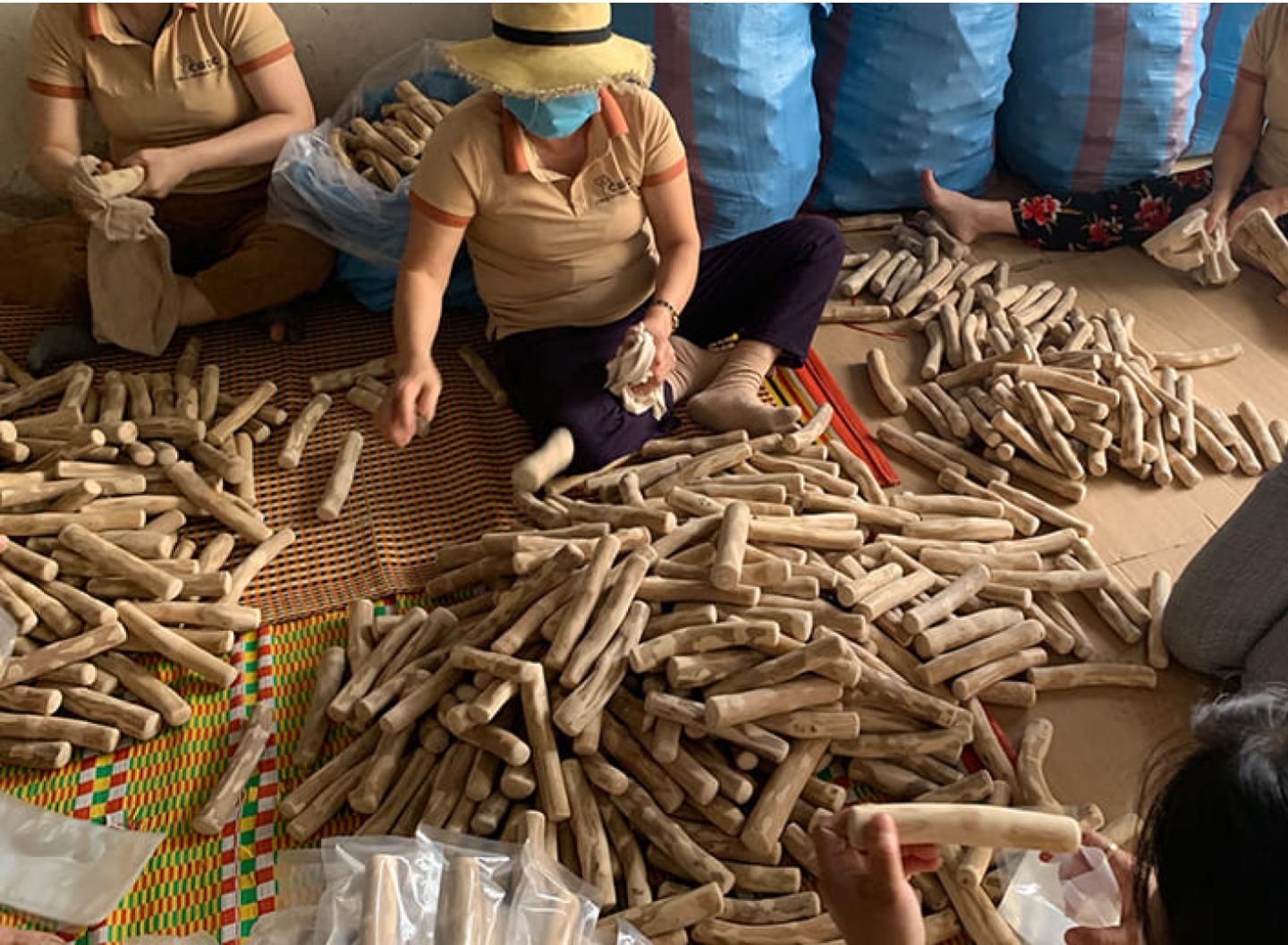
Coffee Wood Chew (CWDC Vietnam) repurposes aged coffee tree branches in Vietnam to produce 100% natural, additive‑free chew toys for dogs that support local farmers, while its dense, durable chews retain a pleasant coffee‑tree aroma and soften into digestible fibers that promote dental health.