
NEW PRODUCT / SOLUTION
Cosmetic oils and creams
APPLICATION SECTOR
Cosmetics
VALORIZED OUTPUT
Spent coffee grounds
TRL
Deploy
CONTEXT
Global
SDG


VALUE CHAIN AREA

Spent coffee grounds vary in particle size and moisture content depending on the brewing process and grind size. Typically dark brown to black with a granular texture, these grounds retain a high concentration of organic compounds and nutrients. Chemically, they are composed of 45-55% carbon and 2-2.5% nitrogen, making them a valuable source of organic matter. They also contain around 40% total fiber, including cellulose (8%) and hemicellulose (36%). While most caffeine is extracted during brewing, residual amounts (<0.5%) remain, along with proteins (10%), lipids (up to 16%), and bioactive compounds such as chlorogenic acids (2.3%), which offer antioxidant benefits (Mendes dos Santos et al., 2021).
Given their rich composition, spent coffee grounds have found a promising role in the cosmetic industry. Their high concentration of antioxidants and anti-inflammatory compounds makes them particularly effective in skincare, especially in facial masks that help protect the skin from oxidative stress and promote a healthy complexion. Furthermore, the residual caffeine content enhances circulation, making coffee grounds useful in reducing dark circles, evening out skin tone, and addressing cellulite.
To unlock these benefits, the spent coffee grounds must first be dried and ground into a fine powder. This powder is then subjected to an extraction process using a suitable solvent—such as water, ethanol, or oil—to isolate the desired bioactive compounds. After the extraction is complete, the liquid extract is separated from the solid grounds through filtration to remove impurities. The resulting concentrated extract can then be incorporated into various cosmetic formulations, including lotions, creams, and masks. By repurposing coffee waste in this way, the cosmetic industry can create natural and sustainable skincare solutions that align with growing consumer demand for eco-friendly products.
Sources:
- ICO 2024, Beyond Coffee: Towards a Circular Coffee Economy coffee-development-report-2022-23.pdf
- Mendes dos Santos, É., Malvezzi de Macedo, L., Lacalendola Tundisi, L., Ataide, J. A., Camargo, G. A., Alves, R. C., Oliveira, M. B. P. P. (2021). Coffee by-products in topical formulations: A review. Trends in Food Science & Technology, 111, 280-291. https://doi.org/10.1016/j. tifs.2021.02.064
DESCRIPTION


IMPACTS

The consistency and particle size of coffee grounds can vary, which may impact the texture of cosmetic products. Additionally, spent coffee grounds can harbor bacteria and mold, making proper processing and preservation essential for product safety.
Furthermore, extracting key compounds like caffeine requires specialized techniques to maintain their potency and prevent degradation, ensuring the effectiveness of the final product.
CHALLENGES AND LIMITS

EXAMPLES OF APPLICATION

A UK-based company using spent coffee grounds for oil extraction and the development of high-value products. They also offer a waste collection service for SCGs.
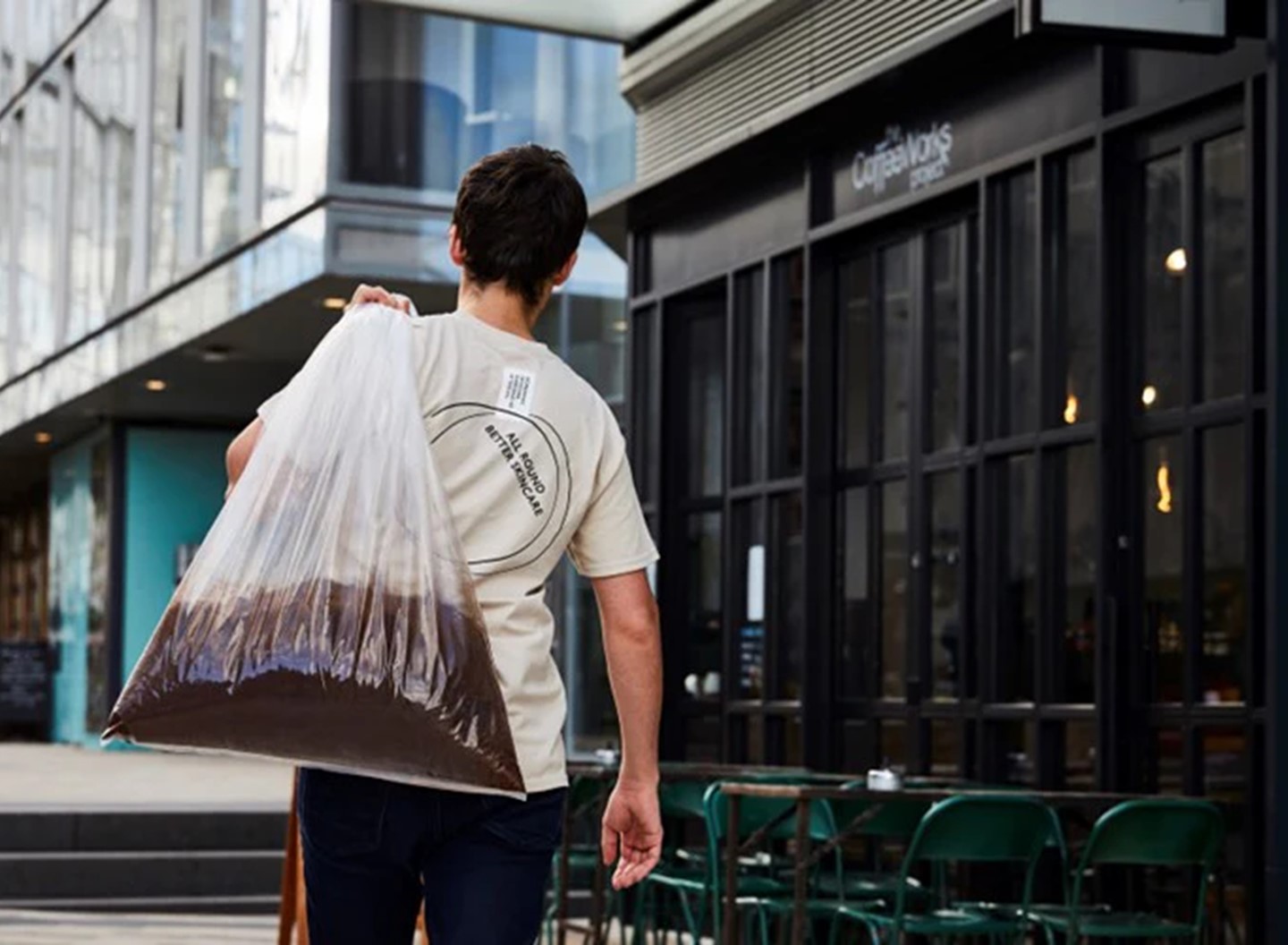
A UK-based company producing cosmetics from upcycled spent coffee grounds. They emphasize waste-free production and collaboration.
Kaffe Bueno
Denmark , 2019

With operations in Columbia, the company works to unlock the potential of coffee by-products. Their efforts span crop health, animal care, and personal healthcare & cosmetics through sustainable biotechnology. In 2023, they inaugurated a new biorefinery in Copenhagen to support their global collaborations.

An urban organization in the Netherlands creating systems for waste collection from businesses, repurposing high-value food waste into products. They work with partners like Rotterzwam to support circular city development.

is a company based in Amsterdam that specializes in upcycling secondary spent coffee grounds. It offers a waste collection system for spent coffee grounds and the technologies needed to convert them into products such as cosmetics, building materials, and textile dye.

The whole cup Sweden’s largest coffee roaster, is working to engage a wide range of stakeholders to help achieve its goal of zero waste by 2030 by providing bars with tools to properly recycle coffee waste.