
NEW PRODUCT / SOLUTION
Rigid plastic products and composite materials
APPLICATION SECTOR
VALORIZED OUTPUT
Coffee husks
TRL
Deploy
CONTEXT
Global
SDG


VALUE CHAIN AREA
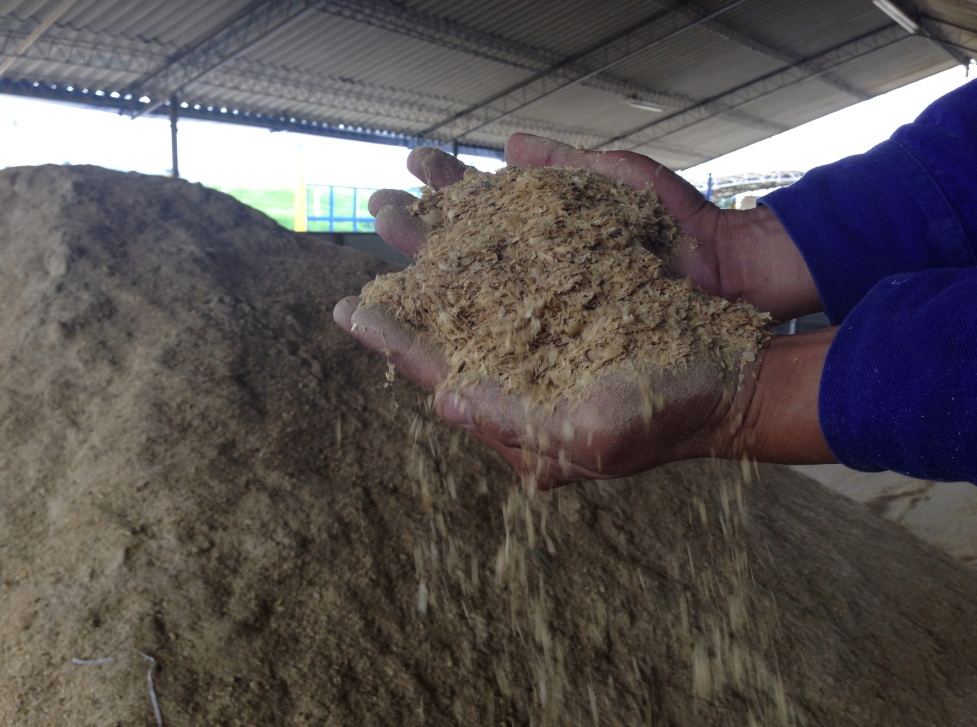
Coffee husk is an abundant agro-industrial byproduct rich in lignocellulosic fibers, making it a promising natural filler for sustainable polymer composites. Utilizing coffee husk helps reduce environmental impact by valorizing coffee processing waste and supports circular economy initiatives in material production.
The coffee husk, an abundant by-product, is transformed into rigid objects such as reusable cups and mugs primarily made from recycled polymers loaded with coffee husk. These objects are more resistant to chipping than ceramics and retain heat better than glass. They are durable, reusable, and can eventually be recycled into new products. However, the recyclability or compostability of these products depends on the amount and type of husk used and on food-contact regulations varying by country.
Coffee husks are also used as recycled material for producing lightweight composite blocks or panels suitable for affordable housing construction, especially in remote or low-income areas. Their chemical composition makes them suitable as lightweight aggregates in concrete, offering good thermal insulation properties. However, the high carbohydrate content slows cement setting, an issue overcome by mineralizing the coffee husks.
Studies have shown its successful incorporation in various polymer matrices. For instance, polyethylene-based composites with 20–40 wt% coffee husk demonstrated good dispersion and fiber exfoliation during processing, which enhanced fiber-matrix contact. These composites exhibited increased stiffness and hardness due to improved crystallinity while maintaining adequate processability (Jaramillo et al., 2021).
Coffee husk has also been explored in biopolymers like PHBV, where its inclusion improved sustainability with favorable mechanical and thermal properties relative to other natural fillers (Janowski et al., 2024). Furthermore, coffee husk has found applications in biomedical PMMA composites (Fouly et al., 2023) and as a filler in cement pastes (Miranda et al., 2024), contributing to improved mechanical properties and hydration behavior. Additionally, coffee husk has been proposed as a sustainable filler in plywood production, demonstrating promising performance with lower environmental impacts compared to conventional materials (Wronka et al., 2025).
Source:
- Fouly, A., Alnaser, I. A., Assaifan, A. K., & Abdo, H. S. (2023). Developing PMMA/coffee husk green composites to meet the individual requirements of people with disabilities: Hip spacer case study. Journal of Functional Biomaterials, 14(4), 200. https://doi.org/10.3390/jfb14040200
- Jaramillo, L. Y., Vásquez-Rendón, M., Upegui, S., Posada, J. C., & Romero-Sáez, M. (2021). Polyethylene-coffee husk eco-composites for production of value-added consumer products. Sustainable Environment Research, 31, Article 34. https://doi.org/10.1186/s42834-021-00107-6
- Janowski, G., Frącz, W., Bąk, Ł., Sikora, J. W., Tomczyk, A., Mrówka-Nowotnik, G., & Mossety-Leszczak, B. (2025). Effect of coffee grounds content on properties of PHBV biocomposites compared to similar composites with other fillers. Polymers, 17(6), 764. https://doi.org/10.3390/polym17060764
- Miranda, E. H. N., Marcelino, T. O., Kuhn, L. S., Gomes, D. R., Vitorino, F. P., Mendes de Andrade, R. C., & Ferreira, S. R. (2024). The influence of coffee husk ash as a filler addition in mechanical and hydration properties of cement pastes. Journal of Engineering Research, 4(1). https://doi.org/10.22533/at.ed.1317412415016
- Wronka, A., Del Valle Raydan, N., Robles, E., & Kowaluk, G. (2025). Coffee silverskin as a sustainable alternative filler for plywood: Characterization and performance analysis. Materials, 18(7), 1525. https://doi.org/10.3390/ma18071525
DESCRIPTION


IMPACTS



Coffee husk composites, while promising, face several technical challenges.
In polymers, the hydrophilic fibers of the husk adhere poorly to hydrophobic matrices, leading to weak bonding, agglomeration and a decline in tensile strength and elongation at high filler contents. Variability in particle size, moisture and chemical composition also affects processing and reproducibility.
These issues can be mitigated by using compatibilizers or surface treatments, which, however, increase costs and complexity. In construction materials, the high sugar and organic content of coffee husks slows the setting of cement unless the husks are pre-treated.
Furthermore, end-of-life recyclability or compostability depends on formulation, and strict food-contact regulations apply when used in kitchenware. Despite these limitations, careful material design makes coffee husk a valuable bio-filler for sustainable composites.
CHALLENGES AND LIMITS

EXAMPLES OF APPLICATION
Picchio WPC®, by Woodpecker SAS in Bogotá, uses coffee husks and recycled plastic to produce panels made of Wood Plastic Composite (WPC) for low-cost housing. Lightweight, durable, and fire-resistant, these panels can be assembled without special tools. The system offers a sustainable and cost-effective alternative to traditional construction methods and is primarily used to build affordable housing in remote and underserved areas, such as rural Colombia. However, the panels are neither recyclable nor biodegradable.
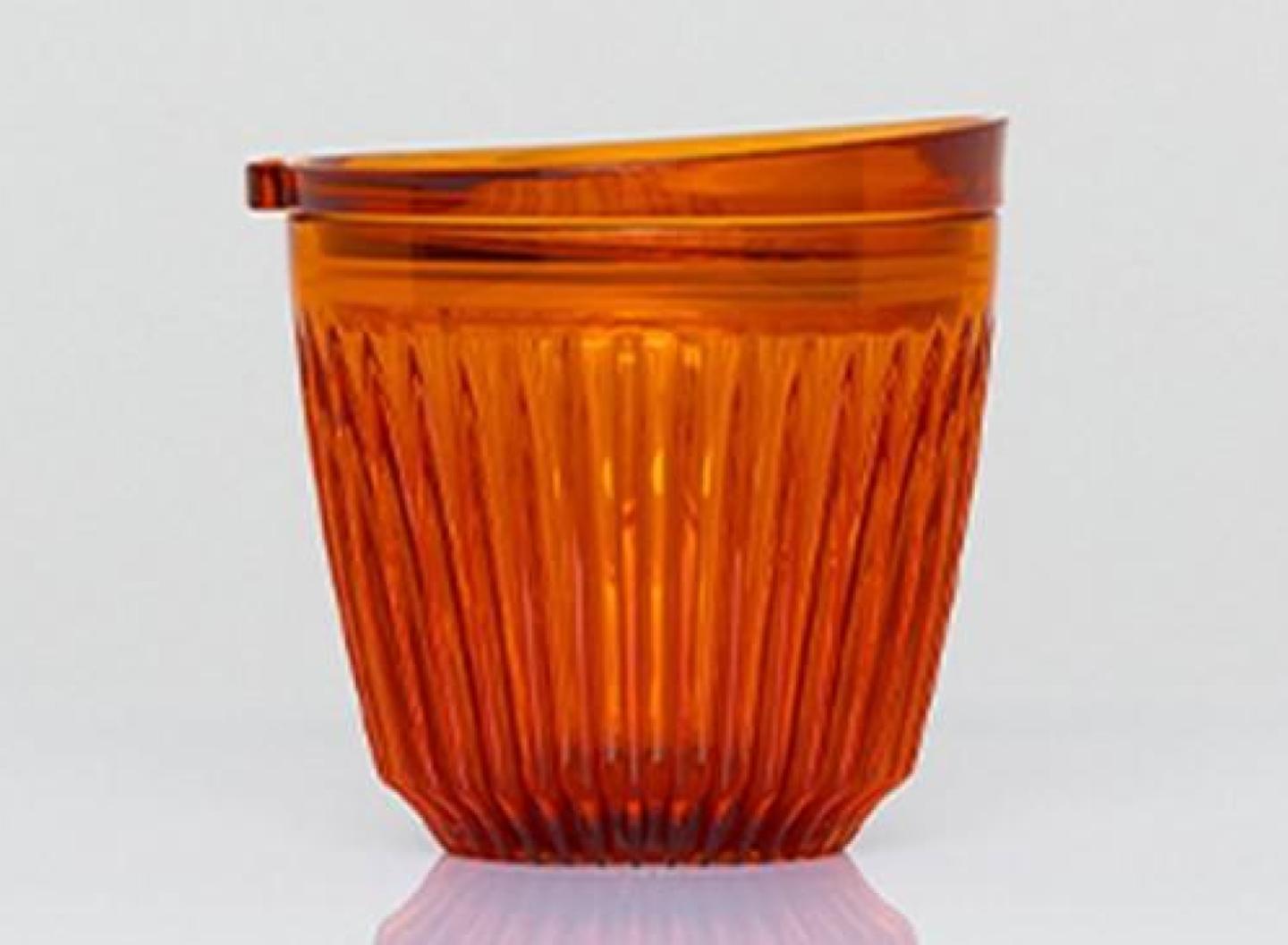
Huskee produces reusable cups made from an eco-composite of recycled polypropylene and coffee husk. These cups are lightweight, durable, shatter-resistant and thermally insulating, with a distinctive finned design that makes them easily recognizable. The company runs projects such as HuskeeSwap, a cup exchange system in cafés to reduce single-use waste, and HuskeeLoop, a program to recycle worn cups into new products, creating a circular model now active in more than 50 countries.