
NEW PRODUCT / SOLUTION
Treated wastewater
APPLICATION SECTOR
Water
VALORIZED OUTPUT
Wastewater
TRL
Deploy
CONTEXT
Global
SDG


VALUE CHAIN AREA
Wastewater treatment is essential for removing contaminants from sewage before it is released into the environment or repurposed for reuse. This process plays a critical role in protecting public health and preventing pollution. An innovative approach involves combining wastewater from wet mills with organic waste to produce fertilizers, simultaneously reducing wastewater volumes and promoting sustainable agricultural practices.
The treatment process varies by facility but typically follows several key stages. First, large solids are removed through screening and grit removal. Organic matter is then separated using sedimentation and flotation. Further purification occurs through filtration, disinfection, and advanced oxidation techniques. Finally, sludge undergoes thickening, dewatering, digestion, or incineration to reduce volume and stabilize organic content before disposal or reuse.
The efficiency of these treatment methods depends on factors such as the technologies used, wastewater composition, and environmental regulations. Research highlights promising applications for coffee husks in wastewater treatment. When converted into biochar through pyrolysis, these cellulose- and lignin-rich husks exhibit strong adsorption properties, effectively capturing pollutants like heavy metals, dyes, and pesticides. This innovation supports the integration of coffee husks into a circular economy model, promoting sustainability within coffee-producing regions (Quyen et al., 2021; Castillo et al., 2021).
Sources:
- ICO 2024, Beyond Coffee: Towards a Circular Coffee Economy coffee-development-report-2022-23.pdf
- Quyen, V. T. B., Pham, T. T. H., Kim, J., Thanh, D. N. H., Thang, P. Q., Van Le, Q., Jung, S., Kim, T. (2021). Biosorbent derived from coffee husk for efficient removal of toxic heavy metals from wastewater. Chemosphere, 284, 131312. https://doi.org/10.1016/j.chemosphere.2021.131312
- TechnoServe (2021). Farmers see the benefits of vetiver wetlands and regenerative agriculture in peru. TechnoServe. https://www.technoserve.org/blog/benefits-of-vetiver-wetlands-regenerative-agriculture-in-peru/
DESCRIPTION


IMPACTS


Building and maintaining treatment facilities require substantial financial investment, and many processes consume large amounts of energy, driving up both operational costs and environmental impact. Beyond these financial and energy demands, the management of treatment byproducts presents additional challenges. Handling and disposing of disinfection chemicals can pose safety risks, while sludge management remains complex due to its large volume and the presence of pathogens and toxic substances.
In developing regions, these challenges are further compounded by limited access to infrastructure, advanced treatment technologies, and trained personnel, making effective wastewater treatment difficult to implement.
 
CHALLENGES AND LIMITS

EXAMPLES OF APPLICATION
Solidaridad, Jacobs Douwe Egberts BV, Olam Peru, the Netherlands Enterprise Agency (RVO), Cuencas del Huallaga and National Forestry Division SERFOR
Perù and The Netherlands , 2022
( Find Out more )
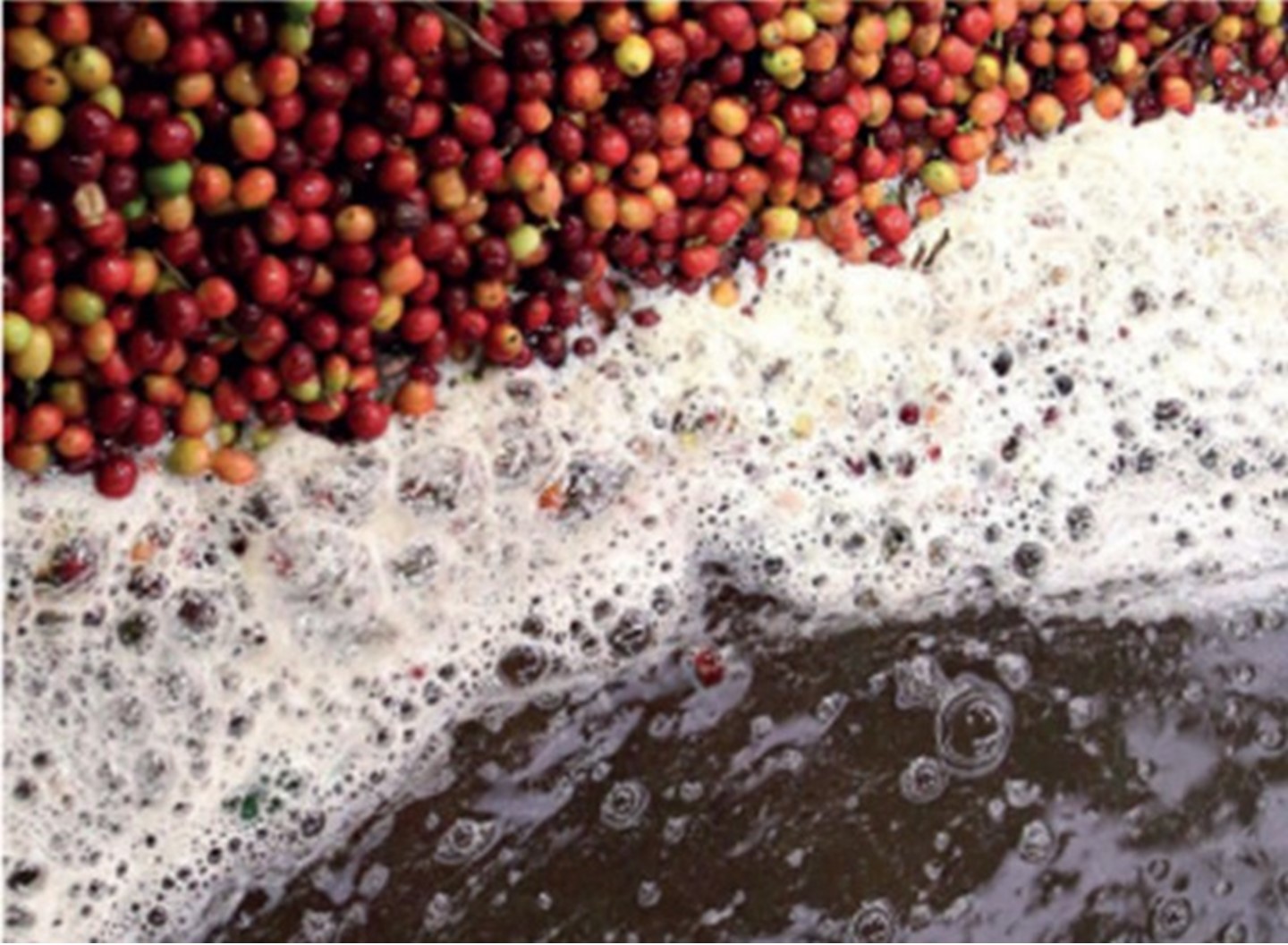
The project involves coffee growers, supporting them in converting wastewater from wet mills and organic waste to fertilizers, reducing wastewater up to 80%. Moreover, coffee producers are supposed to obtain official land use permits from government to plant coffee under agroforestry systems, fostering shade farming and soil conservation and management.
As part of the Nescafé Plan, Nescafé has implemented wastewater treatment systems and enhanced water efficiency in its production sites globally. The company trains farmers in Vietnam to use up to 50% less irrigation water, applies real-time soil and weather monitoring tools, and manages mill wastewater responsibly. These initiatives protect local ecosystems and contribute to sustainable water use throughout the coffee value chain.